-
 info
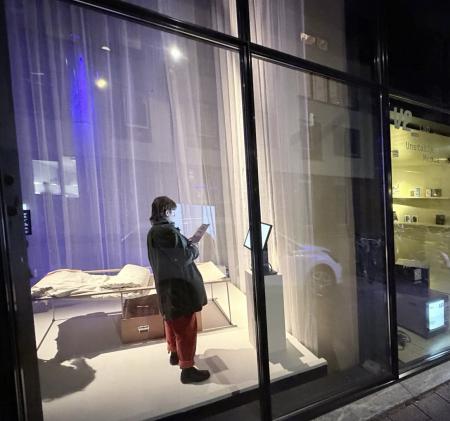
infoAt the intersection of sleep science, artificial intelligence, and energy research, Sleep Transducer shows how sensing, computation, and material regimes redefine what ‘energy regeneration’ means. The same textile records micro-movements, harvests small amounts of electricity, and converts data into sound and suggestion. Its three subsystems—A (Sleep–Wake Classification), B (Energy-Harvesting Events), and C (Sonic Feedback and Dream Incubation)—expose the paradox of smart objects that consume global computing power to optimize individual sleep. The work turns ‘energy budgets’ into a model for reflecting on measurement, autonomy, and resource use.
-
 info
infoAt the intersection of sleep science, artificial intelligence, and energy research, Sleep Transducer shows how sensing, computation, and material regimes redefine what ‘energy regeneration’ means. The same textile records micro-movements, harvests small amounts of electricity, and converts data into sound and suggestion. Its three subsystems—A (Sleep–Wake Classification), B (Energy-Harvesting Events), and C (Sonic Feedback and Dream Incubation)—expose the paradox of smart objects that consume global computing power to optimize individual sleep. The work turns ‘energy budgets’ into a model for reflecting on measurement, autonomy, and resource use.
-
 info
infoAt the intersection of sleep science, artificial intelligence, and energy research, Sleep Transducer shows how sensing, computation, and material regimes redefine what ‘energy regeneration’ means. The same textile records micro-movements, harvests small amounts of electricity, and converts data into sound and suggestion. Its three subsystems—A (Sleep–Wake Classification), B (Energy-Harvesting Events), and C (Sonic Feedback and Dream Incubation)—expose the paradox of smart objects that consume global computing power to optimize individual sleep. The work turns ‘energy budgets’ into a model for reflecting on measurement, autonomy, and resource use.
-
sound decision trees and taxonomies") info
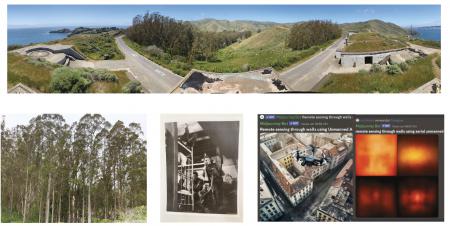
infoCodex of (Un)Sound Decision Trees and Taxonomies From colonial-era eucalyptus introductions and later U.S. Army eucalyptus plantings—used as windbreaks and screens around coastal defenses in the Marin Headlands—to AI world models in autonomous weapons systems (AWS), this research-based installation examines the production of knowledge: how simplified models and taxonomies become decision logic with material consequences. Installation view (work in progress), Headlands Center for the Arts, California, 2023–2024.
-
sound decision trees and taxonomies") info
infoThe experimental Documentation “Remote Sensing through the Walls of Unmanned Aerial Weapons” situates generative AI within debates on world-making: models do not simply depict reality, they produce operational worlds through capture, classification, and prediction. Using World Wide Web archives as material, the project treats video stills and audio tone as experimental documentation to trace how perception becomes computation in militarized systems— especially armed drones, where sensing and automated decision-making fold into the logic of targeting. By foregrounding initial conditions, learned patterns, stochastic randomness, mathematical modeling, and temporal forecasting, the work shows how these systems manufacture “truths,” evade accountability, and recast privacy as something to be overridden by inference—turning statistical correlation into grounds for intervention.
-
sound decision trees and taxonomies") info
info“Codex of (Un)Sound Decision Trees,” situated in the Marin Headlands near Silicon Valley, delves into the intertwined stories of eucalyptus trees and autonomous weapons systems (AWS) as a question of decision-making: who decides, by what logic, and with what authority—then and now. Both are cases where an institution acts on a simplified model of the world, and that model becomes decision logic with material consequences.In the Headlands, eucalyptus, once hailed as colonial trophies, now symbolize historical overreach and a looming apocalypse that is not only sudden but seasonal and slow: planted as soldiers’ protectors, they continue to grow through summers of fire risk and water politics, while also holding shelter, shade, and attachment. They are not only ‘harmful’; they have rights themselves. Yet once classified as ‘invasive,’ they become subject to authorized management actions—including killing—as if a category could settle a living relation. World-making theory in AI matters here not as metaphor but as implementation: through World Models, AI builds internal simulations to understand, predict, and interact with reality, moving beyond simple pattern matching toward reasoning and decision-making. In AWS, that simulated world becomes an operational world. The installation blends eucalyptus paper, photographs, AI imagery, and experimental audiovisuel documentation to investigate how natural ecology and technological advancement co-produce environments, with an emphasis on research within ethical and more-than-human resource management
-
 info
infoExploring AI’s growth and invasive cognitive tech, the project addresses surveillance and ecological risks. It uses natural and artificial data storage (i.e., human memory and synthetic DNA) to encode (un)sound compositions therein. Navigating diverse consciousness states (non)invasively, it highlights memory’s power in decision-making. The project fosters discourse on information genesis and interpretation, aiming to reimagine futures with genuine accountability in trust, security, and care. The project interrelates different aspects of information processing within both ((y)our) natural and synthesized DNA strands.
-
 info
infoThe DNA storage, embedded with the composition, is engraved in the form of an equality symbol within the two-way mirror, which also functions as a sound speaker.
-
 info
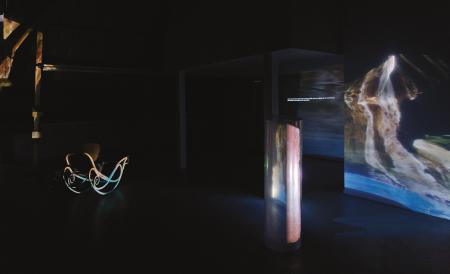
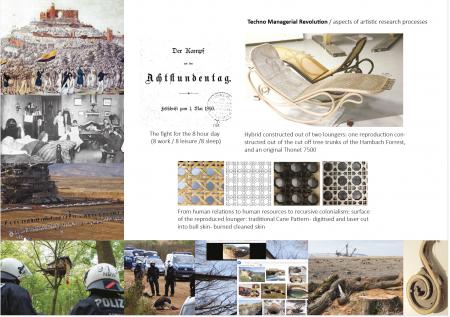
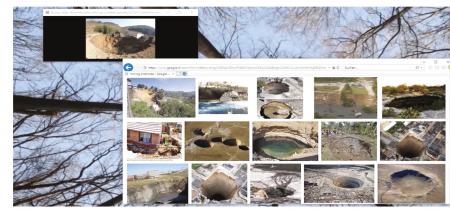
infoThe site-responsive installation comprises three distinct artifacts. The first artifact is a hybrid construct made from steam-bent wood, which combines an original Thonet lounger with an artist-produced replica. The original Thonet rocking lounger 7500, designed in 1880, represents the peak of protest movements in Germany during the industrial revolution. The company Thonet reissued this lounger in 1970, a time when many social rights were redefined by neoliberal concepts. Rajca crafted a reproduction using trees felled during brown-coal mining operations in NRW, Germany. The Hambach Forest region, home to one of Europe's largest brown coal mining pits, is a center for climate activist activities against fossil fuel corporations such as RWE. Surrounding this hybrid, an experimental projection utilizing smart foil fragments and a 3D sound architecture is arranged. An audiovisual collage is projected onto the smart foil, which alternates between opacity and transparency. The collage features a digital photographic archive of sinkholes, which often emerge worldwide due to mineral mining. Following the hyperlinking of these documents on the World Wide Web, a unique animation is created. This archive relies on a re-coded program leveraging Google's search engines and its pattern recognition software. The flood of images is juxtaposed with text and audio fragments from Rajca's research on the impact of manipulating sleep-wake rhythms on "our nature." The original rocking lounger's lying surface is made of handmade rattan, while the replica's surface features a digitized pattern laser-cut into the leather-finished bull's skin. The process of burning out patterns, transformed into the digital sphere via a laser cutter, leaves an intense odor of burned skin in the exhibition space. Initially, the source of this experience is not evident upon entering the room. The scorched leather, after cleaning, closely resembles the color and structure of the freshly processed and bent wood. The room's temperature is maintained at approximately 28 degrees Celsius.
-
 info
infoThe site-responsive installation comprises three distinct artifacts. The first artifact is a hybrid construct made from steam-bent wood, which combines an original Thonet lounger with an artist-produced replica. The original Thonet rocking lounger 7500, designed in 1880, represents the peak of protest movements in Germany during the industrial revolution. The company Thonet reissued this lounger in 1970, a time when many social rights were redefined by neoliberal concepts. Rajca crafted a reproduction using trees felled during brown-coal mining operations in NRW, Germany. The Hambach Forest region, home to one of Europe's largest brown coal mining pits, is a center for climate activist activities against fossil fuel corporations such as RWE. Surrounding this hybrid, an experimental projection utilizing smart foil fragments and a 3D sound architecture is arranged. An audiovisual collage is projected onto the smart foil, which alternates between opacity and transparency. The collage features a digital photographic archive of sinkholes, which often emerge worldwide due to mineral mining. Following the hyperlinking of these documents on the World Wide Web, a unique animation is created. This archive relies on a re-coded program leveraging Google's search engines and its pattern recognition software. The flood of images is juxtaposed with text and audio fragments from Rajca's research on the impact of manipulating sleep-wake rhythms on "our nature." The original rocking lounger's lying surface is made of handmade rattan, while the replica's surface features a digitized pattern laser-cut into the leather-finished bull's skin. The process of burning out patterns, transformed into the digital sphere via a laser cutter, leaves an intense odor of burned skin in the exhibition space. Initially, the source of this experience is not evident upon entering the room. The scorched leather, after cleaning, closely resembles the color and structure of the freshly processed and bent wood. The room's temperature is maintained at approximately 28 degrees Celsius.
-
 info
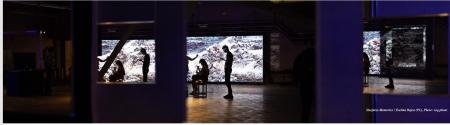
infoSmart cities – Thinking cities – Sinking cities For the experimental documentation, a custom program collects sinkhole images circulating on the World Wide Web. The program draws on search engine concepts similar to Google’s pattern recognition tools. Each document tagged “sinkhole” becomes part of the documentation. A dynamic Flickr stream is presented live during the exhibition, projected onto smart foil and accompanied by a 3D sound composition of spoken words.
-
 info
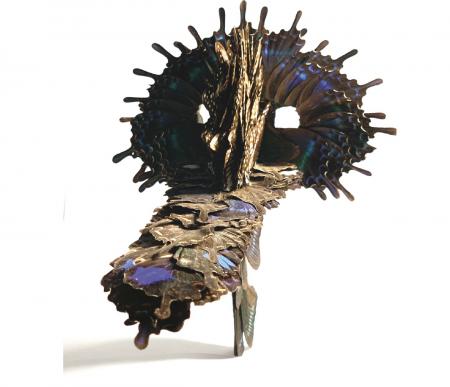
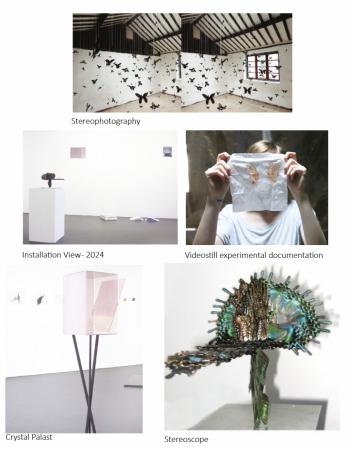
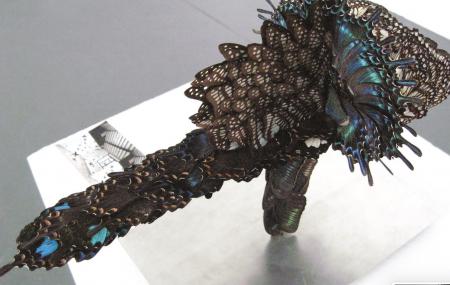
infoThe work, titled "The Diffraction of Imagination," takes the form of an immersive room installation. The execution of the artistic work follows a comprehensive approach in which the individual artifacts within the installation closely intertwine and influence one another's reception. The diverse use of materials serves as both conceptual and aesthetic foundational components. A stereograph stands as an essential key artifact, serving as a starting point to unfold the spectrum. The stereograph displays dried butterflies strung on strings in a traditional Chinese house. It documents a temporary installation created by Rajca in Zhu Jia Jiao, China, and now serves as a guide for reconstruction, inspired by Oliver Wendell Holmes' vision. The butterflies from this installation in China were exported, along with the photographic documentation, to Germany. In Germany, the butterfly wings were utilized to manufacture a stereo viewer. In an 1859 essay, American essayist and physician Holmes presented the idea of creating a comprehensive library of stereo photographs featuring people, monuments, battlefields, and natural idylls. Rajca recreated a stereoscope based on Holmes's design. Holmes suggested that within these comprehensive libraries of stereophotographs, "form could be divorced from matter," and "negatives of a thing worth seeing" would justify the original's demolition. Rajca's stereoscope showcases butterfly wings initially captured through digital stereo photography, investigating the extent to which simulations require matter for perceptiveness. Her work questions who holds the authority to decide what is worth preserving, and what algorithmic value systems are employed in making such determinations. It underscores the notion that the development of "virtual" architectures and value systems, rather than being objective, frequently builds on prejudiced categorizations and the exploitation of resources. This, in turn, can have significant ecological repercussions, such as the dwindling population of pollinators. An experimental audio-visual documentation titled "Contra Factual and Associative," a glass showcase made from glass windows of the Lempertz auction house in Cologne, and accompanying drawings further complement the installation.
-
 info
infoThe work, titled "The Diffraction of Imagination," takes the form of an immersive room installation. The execution of the artistic work follows a comprehensive approach in which the individual artifacts within the installation closely intertwine and influence one another's reception. The diverse use of materials serves as both conceptual and aesthetic foundational components. A stereograph stands as an essential key artifact, serving as a starting point to unfold the spectrum. The stereograph displays dried butterflies strung on strings in a traditional Chinese house. It documents a temporary installation created by Rajca in Zhu Jia Jiao, China, and now serves as a guide for reconstruction, inspired by Oliver Wendell Holmes' vision. The butterflies from this installation in China were exported, along with the photographic documentation, to Germany. In Germany, the butterfly wings were utilized to manufacture a stereo viewer. In an 1859 essay, American essayist and physician Holmes presented the idea of creating a comprehensive library of stereo photographs featuring people, monuments, battlefields, and natural idylls. Rajca recreated a stereoscope based on Holmes's design. Holmes suggested that within these comprehensive libraries of stereophotographs, "form could be divorced from matter," and "negatives of a thing worth seeing" would justify the original's demolition. Rajca's stereoscope showcases butterfly wings initially captured through digital stereo photography, investigating the extent to which simulations require matter for perceptiveness. Her work questions who holds the authority to decide what is worth preserving, and what algorithmic value systems are employed in making such determinations. It underscores the notion that the development of "virtual" architectures and value systems, rather than being objective, frequently builds on prejudiced categorizations and the exploitation of resources. This, in turn, can have significant ecological repercussions, such as the dwindling population of pollinators. An experimental audio-visual documentation titled "Contra Factual and Associative," a glass showcase made from glass windows of the Lempertz auction house in Cologne, and accompanying drawings further complement the installation.
-
 info
info -
 info
infoExploring AI’s growth and invasive cognitive tech, the project addresses surveillance and ecological risks. It uses natural and artificial data storage (i.e., human memory and synthetic DNA) to encode (un)sound compositions therein. Navigating diverse consciousness states (non)invasively, it highlights memory’s power in decision-making. The project fosters discourse on information genesis and interpretation, aiming to reimagine futures with genuine accountability in trust, security, and care. The project interrelates different aspects of information processing within both ((y)our) natural and synthesized DNA strands.
-
divided infinity") info
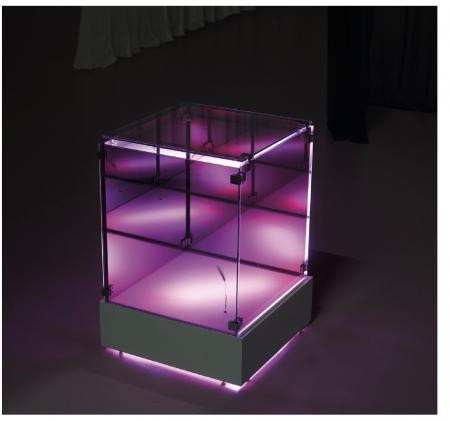
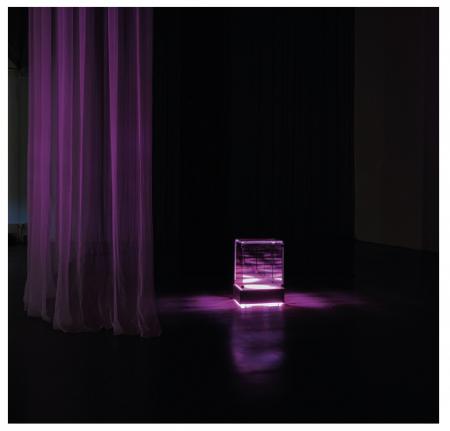
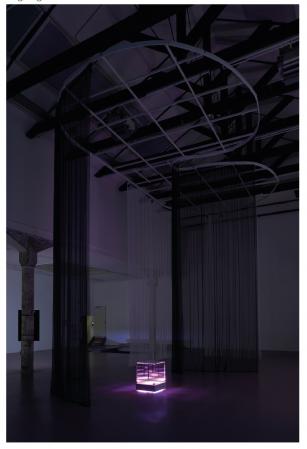
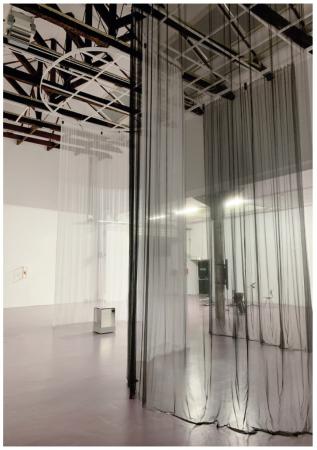
infoThe multisensory installation incorporates specialized high-tech signal shielding bobbinet fabrics and a smart automated curtain track, designed in the shape of a divided infinity symbol ∞. Within the structure, a two-way mirror glass vitrine houses a wild wheat plant (Triticum Aestivum). Equipped with sensors and microcontrollers, the installation captures the plant's circadian rhythm responses under varying exposures to ultraviolet light. The observed oscillations, encompassing metabolism, sleep-wake architecture, and the plant's energy budget, are processed and translated via a Wi-Fi system and an in-built IoT infrastructure. This process generates experimental choreographies and soundscapes within the space, as the plant's monitoring data controls the light and temperature of the environment, as well as the movement of the robots, which subtly move the bobbinet fabric along the automated track, defining the boundaries of the interior and exterior of the (un)divided infinity.
-
divided infinity") info
infoThe multisensory installation incorporates specialized high-tech signal shielding bobbinet fabrics and a smart automated curtain track, designed in the shape of a divided infinity symbol ∞. Within the structure, a two-way mirror glass vitrine houses a wild wheat plant (Triticum Aestivum). Equipped with sensors and microcontrollers, the installation captures the plant's circadian rhythm responses under varying exposures to ultraviolet light. The observed oscillations, encompassing metabolism, sleep-wake architecture, and the plant's energy budget, are processed and translated via a Wi-Fi system and an in-built IoT infrastructure. This process generates experimental choreographies and soundscapes within the space, as the plant's monitoring data controls the light and temperature of the environment, as well as the movement of the robots, which subtly move the bobbinet fabric along the automated track, defining the boundaries of the interior and exterior of the (un)divided infinity.
-
divided infinity") info
infoThe multisensory installation incorporates specialized high-tech signal shielding bobbinet fabrics and a smart automated curtain track, designed in the shape of a divided infinity symbol ∞. Within the structure, a two-way mirror glass vitrine houses a wild wheat plant (Triticum Aestivum). Equipped with sensors and microcontrollers, the installation captures the plant's circadian rhythm responses under varying exposures to ultraviolet light. The observed oscillations, encompassing metabolism, sleep-wake architecture, and the plant's energy budget, are processed and translated via a Wi-Fi system and an in-built IoT infrastructure. This process generates experimental choreographies and soundscapes within the space, as the plant's monitoring data controls the light and temperature of the environment, as well as the movement of the robots, which subtly move the bobbinet fabric along the automated track, defining the boundaries of the interior and exterior of the (un)divided infinity.
-
divided infinity") info
infoThe multisensory installation incorporates specialized high-tech signal shielding bobbinet fabrics and a smart automated curtain track, designed in the shape of a divided infinity symbol ∞. Within the structure, a two-way mirror glass vitrine houses a wild wheat plant (Triticum Aestivum). Equipped with sensors and microcontrollers, the installation captures the plant's circadian rhythm responses under varying exposures to ultraviolet light. The observed oscillations, encompassing metabolism, sleep-wake architecture, and the plant's energy budget, are processed and translated via a Wi-Fi system and an in-built IoT infrastructure. This process generates experimental choreographies and soundscapes within the space, as the plant's monitoring data controls the light and temperature of the environment, as well as the movement of the robots, which subtly move the bobbinet fabric along the automated track, defining the boundaries of the interior and exterior of the (un)divided infinity.
-
 info
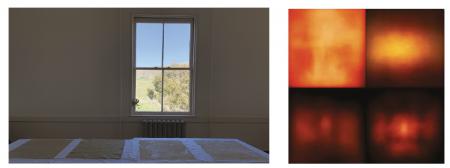
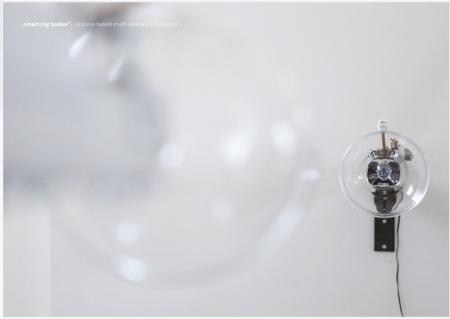
infoIn the long-term project smart.ing bodies, 'glass instruments' are crafted from quartz sand collected in diverse purity levels from vanishing riverbeds, beaches, and mountains across the globe. The sand, with its varying concentrations of silicon dioxide, is essential for creating materials like concrete, fiber optic cables, and computing hardware. The new multi-sensory installation features two glass resonators, of high-purity silicon dioxid brought into motion through robotic components and an algorithmic composition generated by machine learning processes. The two bell-shaped glass bodies resonate, producing pure tones that transform into (un)known melodies, evolving into noise and standing waves, challenging each component's natural material frequencies. To continue playing and prevent a 'resonance catastrophe' (the destruction of the glass or motor due to violent oscillation), the algorithmic program governing the hardware and software must (un)learn to conduct a range of frequencies. The concepts of echo chambers and active noise cancellation play a crucial role in counterbalancing the mismanagement of frequencies that could compromise the material resilience of the other components.


Maakt deel uit van Kunstenaarsinitiatief / Collectief / Broedplaats
ELIA Artistic Research Platform
Aangesloten bij een (digitaal) platform
BBK
Stroom
Lid van Beroeps- / Kunstenaarsvereniging
Stroom Den Haag
Kunstenbond,
Curriculum vitae
Opleidingen
-
2016 - 2017interdisciplinary - artistic research Amsterdam, Rijksacademie van Beeldende Kunsten
-
2009 - 2010Central Academy of Fine ARts Beijing
-
2006 - 0011Academy of Media Arts Cologne Diploma behaald
tentoonstellingen
-
2024'AS IF IN THAT MOMENT THE CITY EMBRACES WOMEN Unsettling Rietveld/Sandberg Amsterdam Groep
-
2023Headlands Center for the Arts Sausalito, CA, Verenigde Staten Groep
-
2022Futur21 - Resources and New Technologies Glass Museum Gernheim Video and multi-sensori Installation - "Architectures of Noise" and "smart.ing bodies" FUTURE 21 – art industry culture encourages people to think about the future of work, sustainability and the climate crisis, the impact of digitalization, and the limits of growth and consumption. At 16 industrial museums in North Rhine-Westphalia, the cradle of industrial culture in Germany, digital artworks, light installations, and spatial interventions will be created from November 2021 to April 2022. Groep
-
2021W139 Amsterdam, Nederland In 2021 werkten de deelnemers van Architectures of Noise individueel en collectief in op kunst gebaseerde onderzoeksprocessen. Het gaat hierbij om leessessies, wandelingen, gesprekken, vergezeld door architecturale en sculpturale interventies, performances, workshops en experimenten, gefocust op de ‘experiri’ (ervaring), rede, en resonantie binnen het publieke en private domein. Tijdens de zomersessie in W139 worden artefacten van diverse maar onderling verbonden aspecten van deze genealogieën van ervaring en epistemische architecturen gedeeld met het publiek. Er wordt onderzocht hoe deze gespecialiseerde en soms ook ambigue instrumenten (i.e., taal, wetten) materialiteiten en politieke concepten die uit het verleden zijn uitgekristalliseerd, de toekomstige vooruitgang beïnvloeden. Architectures of Noise is gecureerd door Evelina Rajca en mogelijk gemaakt in samenwerking met bijdragen van: Clara Palli Pierfrancesco Gava Arefeh Riahi and Sher Doruff Ellington Mingus Susanna Schoenberg Thomas Hawranke Lillian Rosa, Gudrun Schoppe in samenwerking met Samer Makarem Evelina Rajca in correspondententie met Felipe González and Konrad Bohley en genodigden. Meer informatie Handout met uitgebreide tekst Informatie over de werken w139.nl/en/event/architecture-of-noise/ Groep
-
2020Jutta Cuny-Franz Award - Exhibition Kunstpalast Duesseldorf Duesseldorf, Duitsland The Jutta Cuny-Franz Memorial Award was founded by Ruth-Maria Franz (1910–2008) to keep the memory of her daughter and artist Jutta Cuny (1940–1983). Jutta Cuny was one of the most distinguished protagonists of European glass sculpture from the mid-1970s to her early tragic, accidental death. Shaped by sand-blasting from solid glass blocks, her sculptures opened new paths into glass art. Her cubic, polished blocks gained shape through their complex, matted interior. Jutta Cuny found transparent glass to be her favoured material, which she contrasted with others, such as bronze, or porcelain. www.kunstpalast.de/en/museum-3/collection/art-prize/cuny-award Groep
-
2019Out of the Box - Anniversary Ars Electronica Ars Electronica Linz, Oostenrijk 40 Years of Ars Electronica — 40 Years of Art Thinking Ars Electronica is one of the world’s largest media art venues, a digital music festival, a showcase for creativity and innovation, and a playground for the next generation – Ars Electronica is a world-class festival for art, technology and society. ars.electronica.art/outofthebox/en/smart-ingbodies/ Groep
Internationale uitwisselingen / Artist-in-residencies
-
2019
-
2018DAAD Cape Town, Johannesburg, Zuid-Afrika on conflict minerals cargocollective.com/archivedprocesses
-
2017
Recensies
-
2022Aus dem Zukunftslabor - die Glashütte Gernheim Krant Ursula Koch Minden, Duitsland www.mt.de/lokales/petershagen/Aus-dem-Zukunftslabor-die-Glashuette-Gernheim-ist-einer-von-16-Veranstaltungsorten-des-Kunst-Festivals-Futur-21-23220495.html
-
2020KUNSTWERTE Magazine Susanna Schoenberg Cologne, Duitsland www.khm.de/termine/news.5070.out-now-kunstwerte-in-stadtrevue-1-2021-das-monats-magazin-fur-koln/
Prijzen en stipendia
-
2023Nominated for Arte Laguna Art Prize Arte Laguna Art Prize Venice, Italië Category Sculpture and Installation
-
2019smart.ing bodies Prix Ars Electronica Linz, Oostenrijk Honorary Mention - category Music and Sound Art.
-
2019Jutta Cuny Memorial Award Jutty Cuny- Franz Foundation Düsseldorf, Nederland https://www.kunstpalast.de/de/museum/sammlung/kunstpreise-2/Jutta-Cuny
-
2014Splitter Faser Nacht NRW Foundation - Germany San Frasisco, Verenigde Staten Project Stipend for California- USA
-
2013Giga-Hertz-Award for Sound Art ZKM - Giga-Hertz-Award for Sound Art- Karlsruhe Germany Karlsruhe, Duitsland Award for emerging artist
-
2010Decoy Ferchau „Art of Engineering“ Germany Hannover, Duitsland Award for emerging artist